
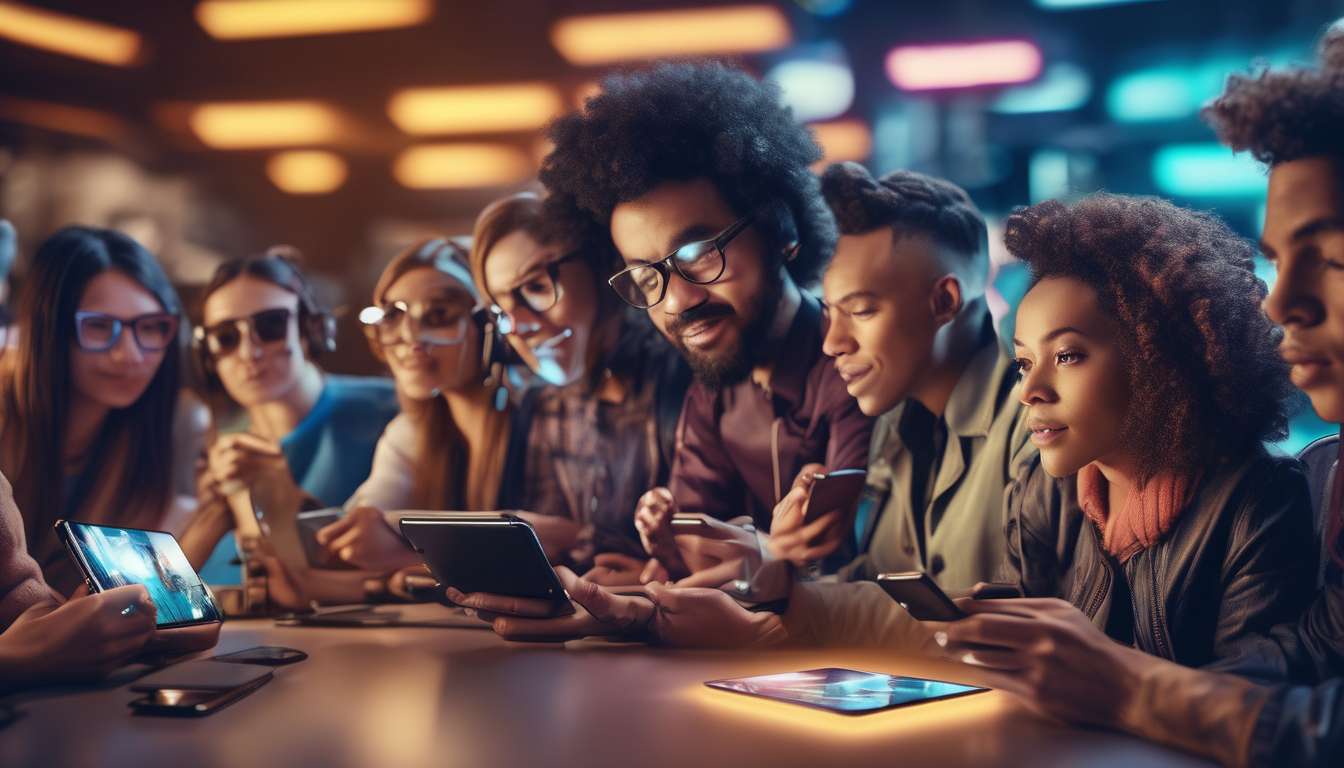
The Evolution of Image Consumption
Nowadays, we find ourselves amidst a dynamic shift in the way adults consume images, driven largely by the relentless evolution of mobile technology. Over the past few years, we’ve witnessed a dramatic transformation in our daily habits; moving from traditional print magazines and photo albums to the instantaneous scrolling of our social media feeds.
Current Trends in Image Consumption
Current trends highlight a growing reliance on smartphones for:
- Capturing images
- Exploring visual content through applications designed to enhance experiences
Impact of Mobile Innovations
As we navigate this digital age, it’s becoming increasingly evident that our image consumption preferences are being molded by mobile innovations. The convenience of accessing high-quality images with just a tap or swipe has fundamentally altered our engagement with visual content.
Broader Implications
This change has prompted us to reconsider:
- Our personal interactions with images
- The broader implications for media and advertising industries
Reflection
Ultimately, we must ask: How are our lives reshaping around these tiny screens in our hands?
Changing Habits in Image Consumption
Over the past decade, we’ve seen a dramatic shift in how people consume images, largely driven by advancements in mobile technology. As a community, we’ve embraced mobile devices as our primary tools for visual engagement. Whether we’re scrolling through social media feeds or sharing moments with friends, our smartphones and tablets have become essential. They’re the bridge connecting us to a world where images tell stories and create bonds.
As we navigate this digital landscape together, social media platforms have transformed into vibrant communities where images speak louder than words. We’ve noticed how visual engagement on these platforms fosters a sense of belonging, allowing us to connect with others who share our interests and passions.
Our habits have evolved; we’re not just passive observers anymore. Instead, we actively participate in creating and curating our visual narratives. Through this shared experience, we’re shaping new ways to interact, express, and relate to each other in our ever-connected world.
Mobile Devices as Visual Tools
Our smartphones and tablets have become indispensable for capturing, editing, and sharing images instantly, transforming how we visually communicate. With mobile devices always within reach, we’re able to:
- Document moments as they happen
- Create a sense of belonging through shared experiences
These devices empower us to:
- Express our identities
- Connect with others
- Foster deeper visual engagement
Mobile devices offer a range of tools that were once exclusive to professional photographers:
- High-resolution cameras
- Intuitive editing apps
- Seamless integration with social media platforms
This accessibility encourages creativity and allows us to:
- Produce compelling visual content
- Distribute content effortlessly
- Engage with a larger community more effectively
As we navigate our digital environments, mobile devices become essential companions in our daily lives. They enable us to:
- Partake in collective storytelling
- Bridge distances
- Break barriers
By harnessing this visual power, we enhance our connections and reinforce our place in the ever-evolving social landscape.
Role of Social Media Platforms
We increasingly rely on social media platforms to share and discover images, transforming how we interact with visual content. Through our mobile devices, we’re constantly connected to a vibrant community where visual engagement is at the forefront of our interactions. Platforms like Instagram, Facebook, and Snapchat have become essential spaces for us to express ourselves and connect with others through images.
We find ourselves immersed in a dynamic environment where visual content speaks louder than words. These platforms allow us to curate our experiences and share moments instantly, providing a sense of belonging as we engage with like-minded communities. Our mobile devices, acting as both camera and canvas, empower us to capture and share our unique perspectives.
Social media doesn’t just connect us; it builds bridges across diverse cultures and interests. By engaging with visual content, we form connections that transcend geographical boundaries. Together, we create a shared visual narrative, enriching our lives and deepening our sense of community.
Enhanced User Experiences
With advancements in mobile technology, we’re experiencing richer, more interactive ways to engage with visual content. Our mobile devices have evolved into powerful tools, seamlessly integrating with social media to enhance our visual engagement. We’re no longer passive viewers; we actively participate in a vibrant digital community, sharing and creating visual stories that resonate with us.
Mobile devices allow us to effortlessly capture and share moments, fostering a sense of connection and belonging. High-resolution cameras and intuitive editing apps empower us to produce visually stunning content. Additionally, augmented reality and immersive features bring our images to life in unexpected ways. These innovations transform our everyday experiences, making them more vivid and memorable.
Social media platforms amplify this transformation by offering dynamic spaces where we can express ourselves visually. Whether we’re:
- Exploring virtual galleries
- Participating in interactive challenges
We find ourselves part of a global conversation. Together, we’re redefining visual engagement, embracing a future where images are more than just pictures—they’re our shared experiences.
Shifting Advertising Strategies
Brands are increasingly leveraging mobile technology to craft personalized advertising experiences that resonate with our digital lives. They’ve learned that connecting with us on a personal level involves utilizing mobile devices and social media platforms we engage with daily.
We see ads that speak directly to our:
- Interests
- Hobbies
- Aspirations
This fosters a sense of belonging and connection. As we scroll through our feeds, the visual engagement strategies employed by these brands become apparent. They’re not just selling products; they’re telling stories that draw us in and make us feel like part of a community.
Our mobile devices have become gateways to these compelling narratives. We’re no longer passive observers; we’re active participants in brand stories. By integrating seamlessly into our online interactions, brands create experiences that are both immersive and meaningful.
This shift in advertising strategies acknowledges our desire for a more authentic connection and enhances our sense of inclusion in the digital age.
Impact on Media Consumption
Our media consumption patterns have transformed dramatically as mobile technology continues to influence how we access and engage with content. With mobile devices in our hands, we’re no longer tied to traditional media sources. We’ve embraced a world where information and entertainment are just a tap away.
These devices have brought us closer together, creating communities where we can share experiences and interests.
Social media platforms amplify this shift, offering endless streams of content tailored to our tastes. As we scroll through feeds, visual engagement becomes key.
- Images and videos captivate our attention
- Encouraging us to interact and share
This visual-centric approach has reshaped how we perceive and connect with the world around us.
We’ve become part of a dynamic, visually-driven culture, united by our shared experiences. Mobile technology and social media have not only changed how we consume media but also how we belong to a larger, interconnected community.
Let’s embrace this new era together.
Personal Engagement with Visuals
Our interactions with images and videos have transformed communication and self-expression.
With mobile devices readily available, we constantly capture and share moments on social media, creating a visual dialogue that connects us with others. This engagement transcends mere broadcasting; it fosters participation in a shared visual culture, enhancing our sense of belonging and community.
We are drawn to platforms that prioritize visual engagement, where:
- Scrolling through images and videos becomes part of our daily routine.
- Visuals evolve from passive content to interactive experiences.
- We are invited to like, comment, and share, becoming active participants in a continuously evolving visual narrative.
Our mobile devices serve as gateways to a richer understanding of each other and the world. Together, we craft a collective visual story that is:
- Vibrant
- Inclusive
- Ever-expanding
In essence, these interactions not only enrich our personal connections but also contribute to a broader, interconnected visual culture.
Future of Mobile Image Trends
In the future, we’ll witness revolutionary shifts in how we create, share, and interact with images on our devices. As mobile devices evolve, they’ll become even more integral to our daily lives, fostering a sense of community through shared visual experiences.
Social media platforms will continue to be at the heart of this transformation, enabling us to connect over images that resonate with our shared interests and values.
Visual engagement will become more immersive and interactive due to:
- Augmented Reality (AR), which will enhance our ability to personalize visual experiences.
- Artificial Intelligence (AI), which will allow real-time manipulation of images.
We’ll capture moments with unprecedented clarity and share them instantly, inviting others into our lives in meaningful ways. As we navigate this ever-changing digital landscape, our collective experiences will be enriched by these advancements, fostering deeper connections with friends, family, and the world.
Together, we’ll embrace these trends, ensuring that our visual interactions remain an essential part of our social fabric, bringing us closer than ever before.
How has mobile technology affected the privacy and security of personal image sharing?
Mobile Technology and Image Sharing
Mobile technology has significantly transformed how we share images, impacting privacy and security.
Social Media Platforms and Messaging Apps
- Social media platforms and messaging apps facilitate easy uploading and sending of photos.
- This convenience raises concerns about who can access our personal images.
Privacy Risks
With features like:
- Geotagging
- Facial recognition
there’s a risk of unintentional data exposure.
Protecting Personal Information
To protect our personal information, we must:
- Stay vigilant about adjusting our privacy settings.
- Be mindful of what we share.
By taking these steps, we can better safeguard our privacy in the digital age.
What are the environmental impacts of increased mobile technology use for image consumption?
When examining the environmental impacts of increased mobile technology use for image consumption, several key factors come into play:
-
Energy Consumption: Mobile devices require electricity to operate, and the demand for energy increases with the frequency of use for viewing and sharing images.
-
Electronic Waste: As technology advances, older devices become obsolete, leading to an accumulation of electronic waste. This waste often contains hazardous materials that can harm the environment.
-
Resource Extraction: The production of mobile devices requires the extraction of natural resources, which can lead to environmental degradation and depletion of non-renewable resources.
As a community, it is crucial to adopt more sustainable practices to minimize the environmental footprint of our digital habits. Here are a few steps that can be taken:
-
Optimize Energy Use:
- Reduce screen brightness.
- Use energy-saving modes.
- Unplug devices when not in use.
-
Proper Disposal of Devices:
- Recycle old devices responsibly.
- Support e-waste recycling programs.
-
Extend Device Lifespan:
- Regularly update software instead of buying new devices.
- Repair rather than replace whenever possible.
By being mindful of these practices, we can collectively reduce the environmental impact associated with mobile technology use for image consumption.
How do demographics influence the adoption of mobile technology for image consumption?
Demographics Influence on Mobile Technology Adoption
Demographics significantly impact how we embrace mobile technology for viewing images. Key factors include:
-
Age: Younger individuals are generally more tech-savvy and open to new trends.
-
Income Level: Those in lower-income brackets may have limited access to these devices.
-
Location: Geographic location can also influence technology adoption rates.
Tailoring Approaches
Understanding these demographic differences enables us to:
- Tailor our approach to image consumption.
- Optimize technology use to better suit our diverse community.
Conclusion
By considering these factors, we can ensure more inclusive and effective technology adoption strategies.
Conclusion
As mobile technology continues to evolve, adult image consumption patterns are undergoing a significant shift. With the widespread use of mobile devices as visual tools and the influence of social media platforms, users are experiencing enhanced and personalized visual experiences.
This change is not only impacting advertising strategies but also reshaping how individuals engage with visual content.
The future of mobile image trends looks promising, as technology continues to drive innovation and personalization in this space.